

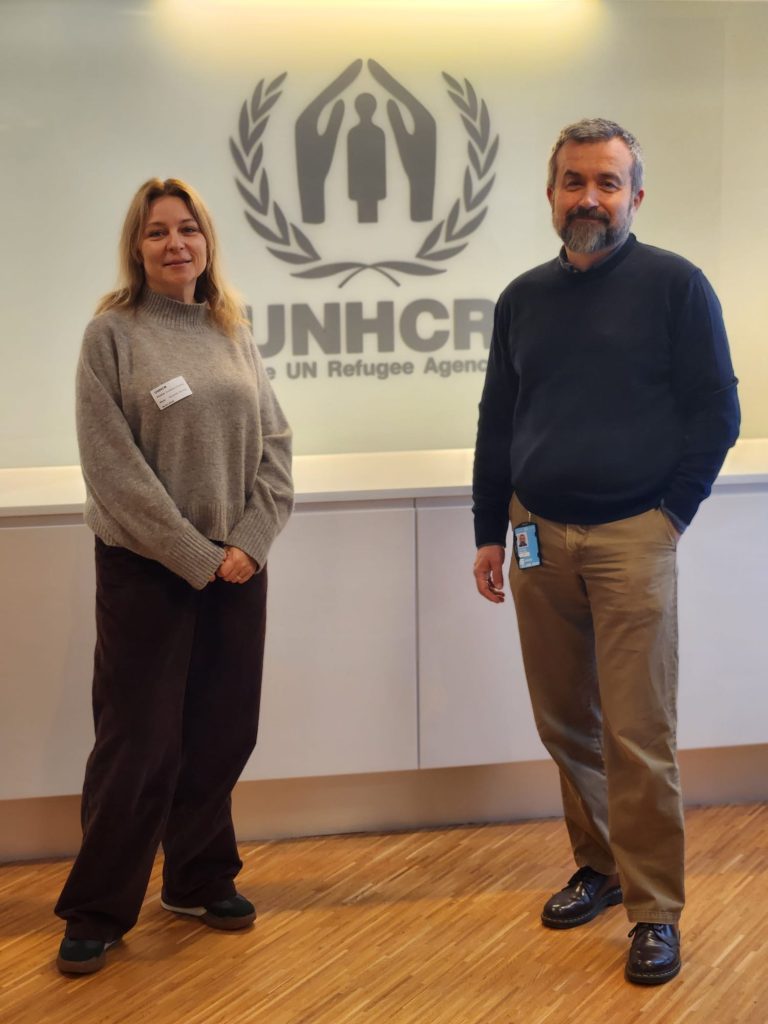
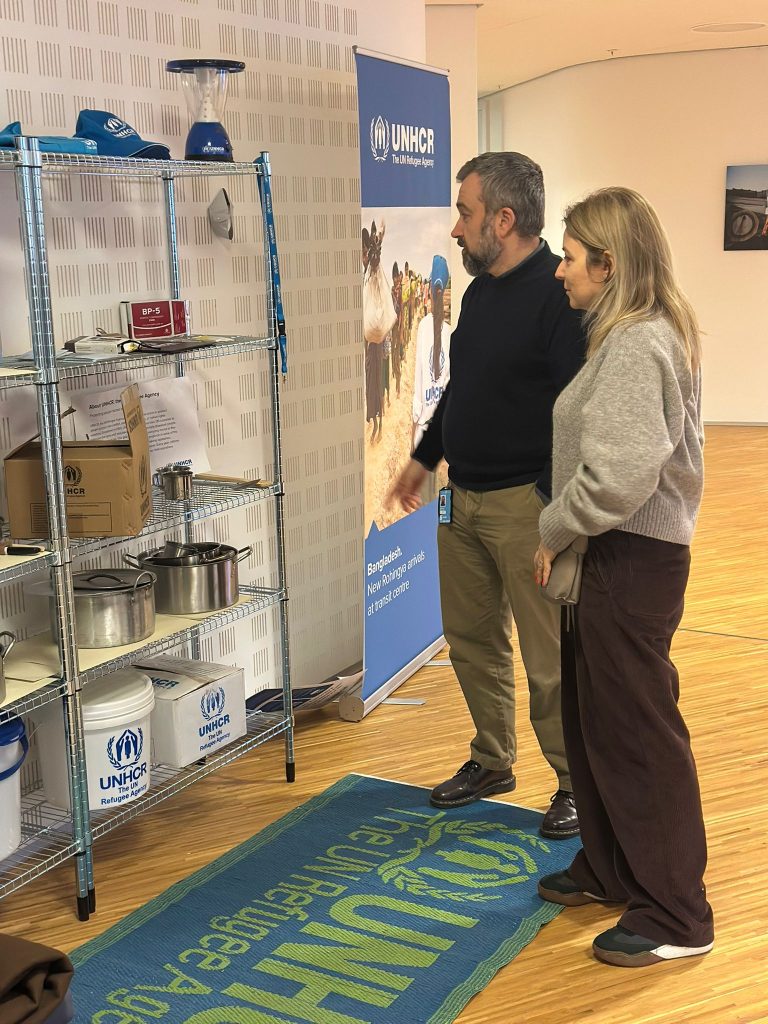
Anastasia Sorokina, Chair of the FIDE Commission for Women’s Chess, recently visited the UNHCR office, where she met with Mr. Alex Novikau, Chief Data Protection and Privacy Officer. The meeting held special significance, as Mr. Novikau was among those from whom the idea behind this initiative originally emerged – a thoughtful reminder of how strong cooperation and shared values can give life to impactful projects.
The discussion focused on the Girls’ Club – a flagship project of the FIDE Commission for Women’s Chess, implemented within FIDE’s wider Chess for Protection programme. The meeting reaffirmed the importance of long-term, value-driven support for refugee communities, particularly for girls, whose access to education and empowerment opportunities often remains limited.
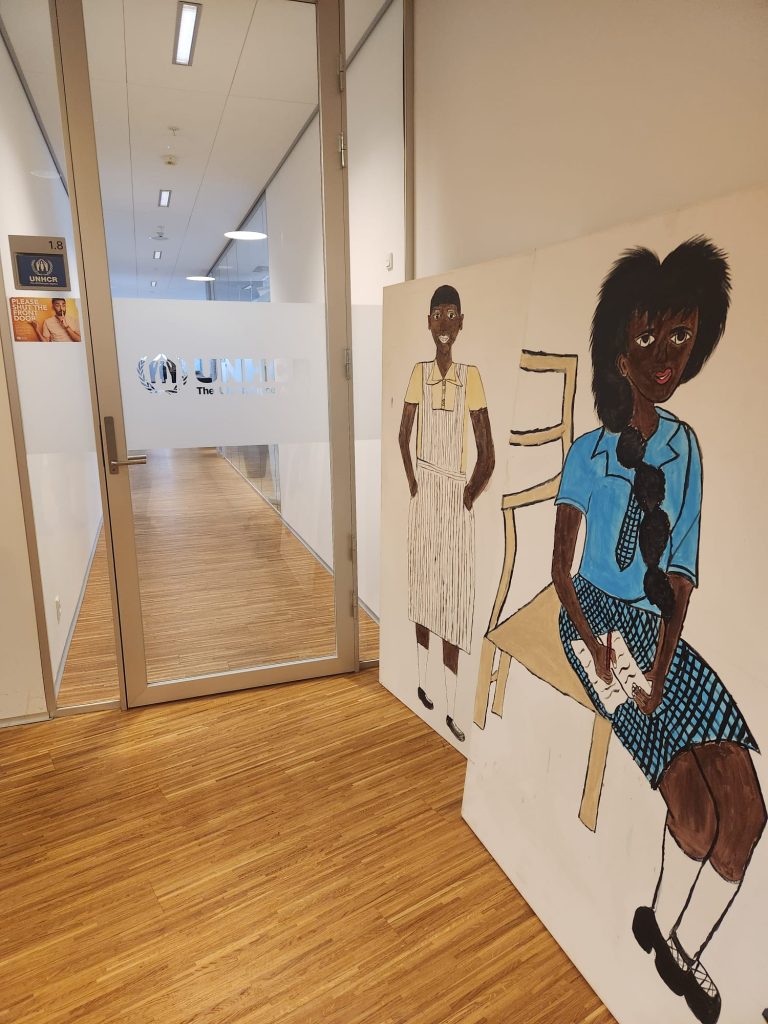
The Girls Club in Kakuma Refugee Camp
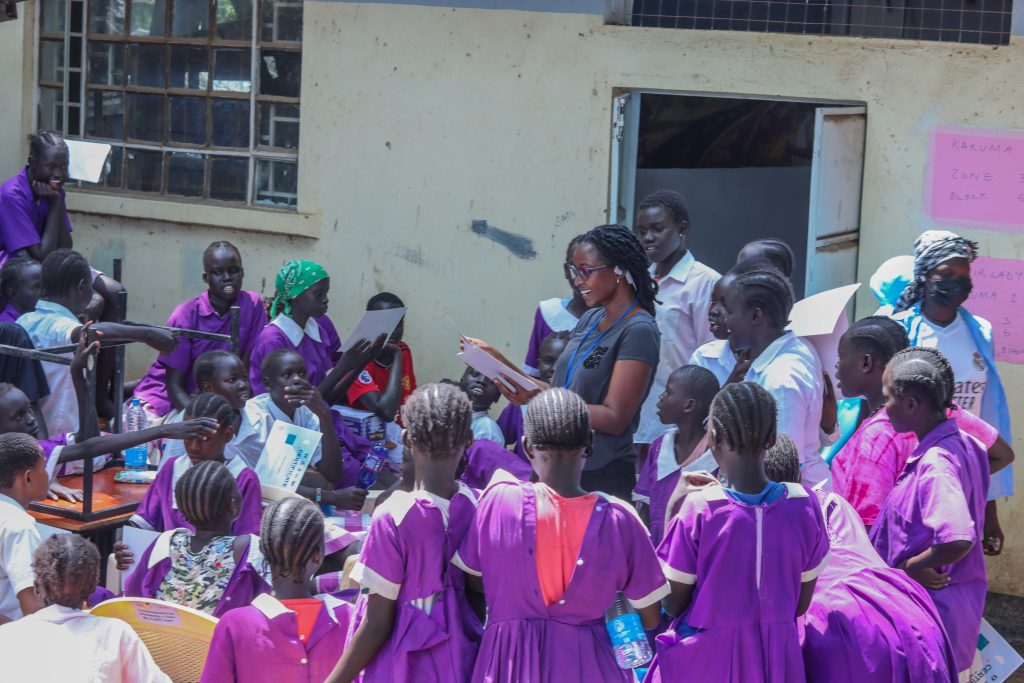
The Girls’ Club project is currently running in Kakuma Refugee Camp, where it brings together girls from four different schools. Through regular chess training, the project provides a safe and structured space that encourages learning, critical thinking, and self-confidence.
A defining strength of the programme is its coaching team. The girls are trained by highly experienced, world-class women coaches – International Master Melia Salome and Woman Grandmaster Anastasia Karlovich – whose involvement offers not only top-level chess instruction but also powerful role models for the young participants.
Looking Ahead to the Olympiad
The Girls’ Club team is preparing to take part in the upcoming Chess Olympiad, reflecting the project’s steady development and the girls’ growing commitment. While teams (from the whole Chess for Protection project) have already been pre-selected, the final compositions will be confirmed in April. Following the holiday break, the Girls Club officially resumed activities this Saturday, with renewed enthusiasm from the players.
In the months leading up to the Olympiad, plans are in place to organise an additional visit by a coach to further support the girls’ preparation, ensuring they are well equipped for both the competitive and personal aspects of the experience.
Why Chess Is Important in Kakuma
Chess offers far more than a game. Within the Chess for Protection framework, it becomes a tool for stability, education, and hope – helping refugee girls develop skills that extend well beyond the chessboard.
The visit to UNHCR underscored a shared belief: that meaningful change is built through consistent support, trust, and opportunities that allow young people to see a future shaped by possibility rather than limitation.
To learn more about Girls’ Club and our work there, you can visit this article.