


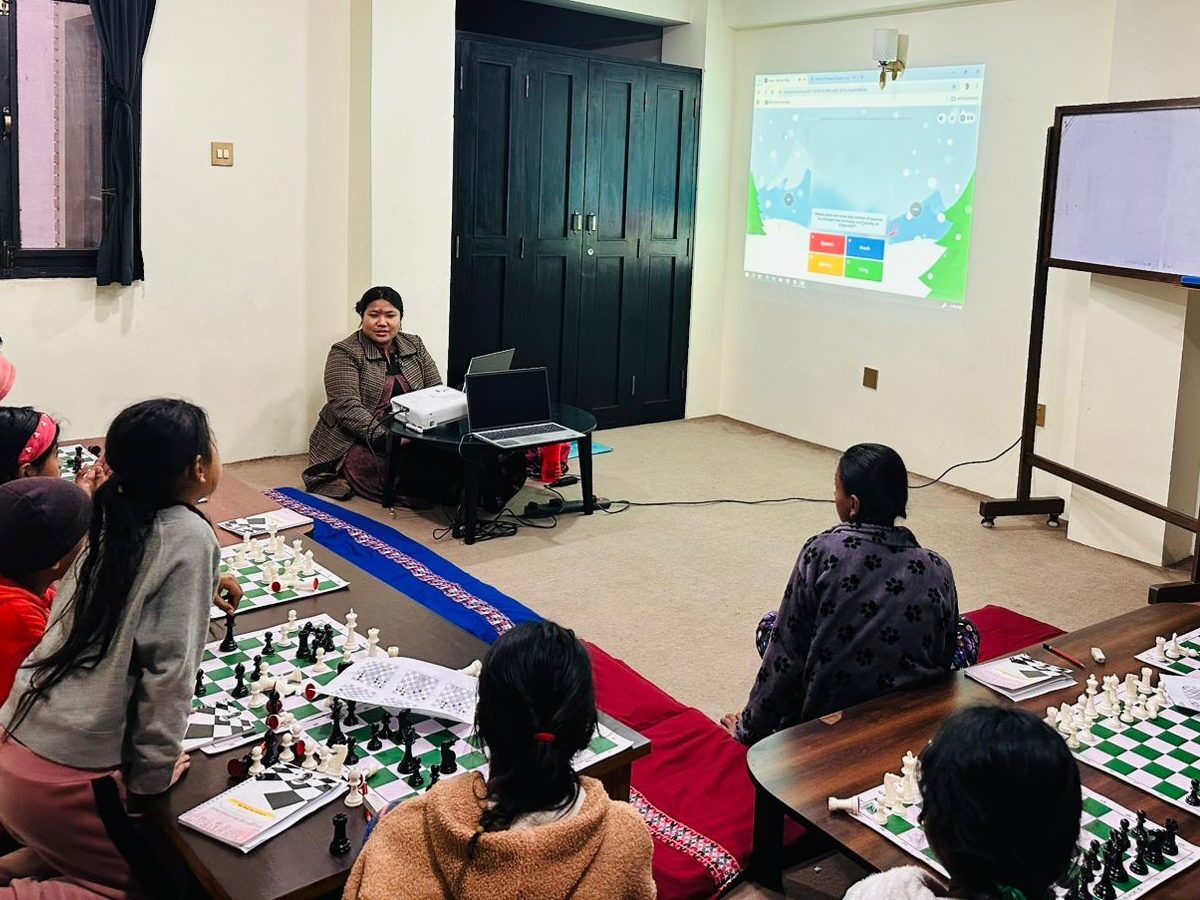
From January 13–17, 2026, a small but deeply meaningful chess workshop took place in Kathmandu, Nepal, bringing together chess, education, and social empowerment in a way that perfectly reflects the values of the FIDE Commission for Women’s Chess (WOM).
Organised by our partner, the Himalayan Chess Academy in collaboration with the Junkiri Feminist Library, the Junkiri Chess Workshop engaged 17 children from marginalized communities, including 11 girls. More than just a training camp, the workshop demonstrated how sustained access to chess can build confidence, leadership, and a sense of belonging—especially for girls who may otherwise have limited opportunities to participate in formal sporting spaces.
A Safe Space for Learning and Confidence
Junkiri Feminist Library, an initiative of Voices of Women Media (VoW Media), is a community-based feminist learning space that focuses on education, critical thinking, and confidence-building for children, with a strong emphasis on girls’ empowerment. Within this supportive environment, chess was not simply taught as a game, but embraced as a tool for learning, expression, and growth.
The January workshop built on an earlier introductory camp held in October 2024, where many participants encountered chess for the first time. Since then, continuity has played a crucial role. Selected participants were invited to take part in Himalayan Chess Academy events, including women-only tournaments such as the Queen’s Gambit, helping to normalize girls’ participation in formal chess environments and encouraging long-term engagement.
Leadership That Inspires
The workshop was led by IA / WCM / FI Monalisha Khamboo, Nepal’s first Women’s National Champion and a valued member of the FIDE Commission for Women’s Chess. Her presence as a national and international-level role model had a powerful impact, particularly on the girls.
Strong female leadership created an atmosphere of trust and aspiration, showing young participants what is possible within chess. At the same time, the training maintained high technical and pedagogical standards, ensuring that learning outcomes remained central throughout the camp.
Visible Progress and Peer Learning
The growth since the initial workshop was clear. Children asked more advanced, concept-driven questions, demonstrated improved pattern recognition, and engaged confidently with ideas beyond basic rules. Sessions progressed more quickly, allowing trainers to focus on strategy, decision-making, and problem-solving rather than revisiting fundamentals.
A particularly encouraging development was peer-to-peer learning. With chess boards now available at the Junkiri Feminist Library, children who had attended the earlier workshop began mentoring newer beginners, reinforcing their own knowledge while helping others learn. This collaborative approach significantly accelerated progress and strengthened confidence—especially among girls, who increasingly took initiative during discussions and play.
Bridging Learning and Competition
While learning remained at the heart of the program, participants were also introduced to structured competitive chess. For many, this was their first experience using chess clocks and playing under FIDE rules. Initial surprise quickly turned into enthusiasm, as children embraced time management, discipline, and the excitement of formal play.
Quizzes, guided discussions, and interactive sessions were integrated alongside games, ensuring that different learning styles were supported and that understanding went beyond results alone.
Inclusive Recognition
For the first time in the collaboration with Junkiri, participants received formal recognition through medals. In addition to awards for top performers, special categories such as Best Discipline, Most Enthusiastic Learner, and Best Idea Implementer were introduced. This inclusive recognition model highlighted effort, creativity, and positive behavior—values that are especially important when building confidence and long-term engagement among young players and kids in general.
Looking Ahead
Several children demonstrated exceptional potential, showing strong analytical thinking and strategic understanding for their age. Sustaining this development will require regular, structured training, and the Himalayan Chess Academy, together with Junkiri Feminist Library and VoW Media, is actively exploring sustainable models to support continued learning—particularly for girls from marginalized backgrounds.
The FIDE Commission for Women’s Chess warmly appreciates the dedication and vision of the Himalayan Chess Academy, Junkiri Feminist Library, and Voices of Women Media. We also extend special recognition to Monalisha Khamboo for her leadership, commitment, and inspiring contribution to this initiative.
Projects like the Junkiri Chess Workshop remind us that meaningful change in chess does not come from one-time exposure, but from continuity, care, and community. They reflect the true spirit of women’s chess development: inclusive, empowering, and rooted in opportunity for all.