On World Refugee Day, celebrated annually on 20 June, the FIDE Commission for Women’s Chess joins the global community in recognizing the strength, resilience and potential of millions of displaced people around the world.
How Chess changes lives of the refugees
Through Chess for Protection programme, chess continues to provide refugee children and youth with opportunities for learning, personal development, connection, and hope for the future.
Launched in August 2021 by FIDE in partnership with UNHCR, the Lutheran World Federation (LWF), Chess Kenya, and the Kakuma Chess Club, Chess for Protection uses chess as a tool for education, empowerment and social inclusion. The programme contributes to the protection and well-being of refugee youth and adolescents while creating pathways for leadership, skills development, and meaningful engagement within their communities.
Creating Opportunities Through Chess
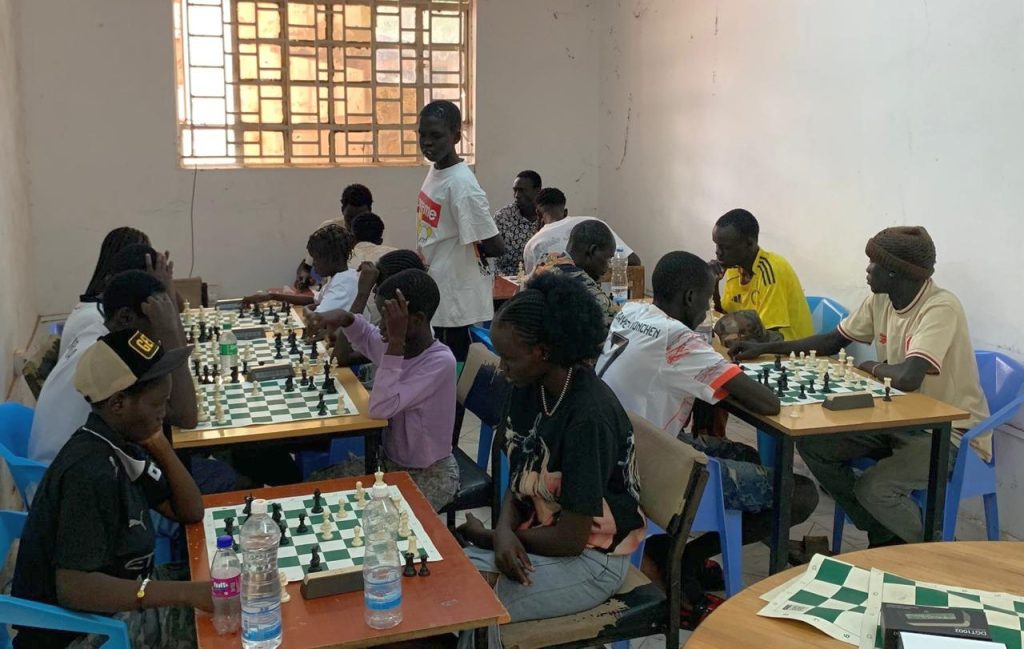
Since its launch, Chess for Protection has grown into a vibrant community initiative in Kakuma Refugee Camp and Kalobeyei Settlement in Kenya. By the end of 2025, more than 2,500 refugees had received chess training through the programme. Today, 25 facilitators continue to deliver lessons in schools and youth centres, while regular tournaments help young players develop confidence, discipline, and critical thinking skills.
Beyond learning the game, participants gain valuable life skills that can be shared with others, strengthening both individual development and community resilience. The programme also creates links with the wider chess community in Kenya and internationally, opening doors to new opportunities and experiences.
The Girls’ Club: A Space for Growth and Empowerment
A particularly important component of Chess for Protection is the Girls’ Club, which we established to support young women and girls who often face additional barriers to participation in education and extracurricular activities.
Led by our Commission, under the leadership of Anastasia Sorokina, who also heads the global Chess for Protection programme, the Girls’ Club provides a safe and inspiring environment where girls can learn, grow, and build confidence.
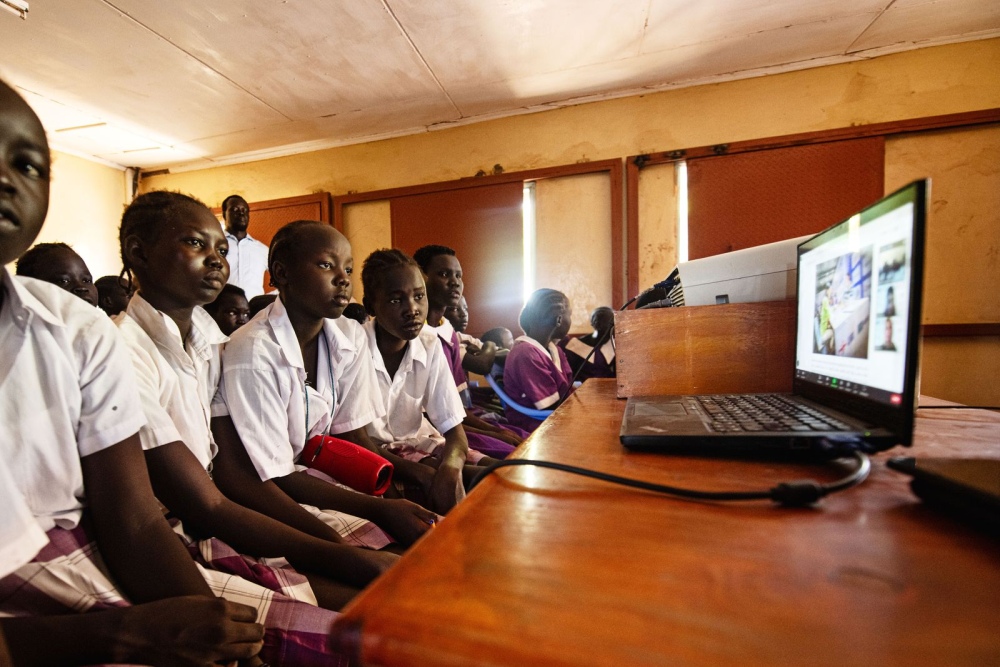
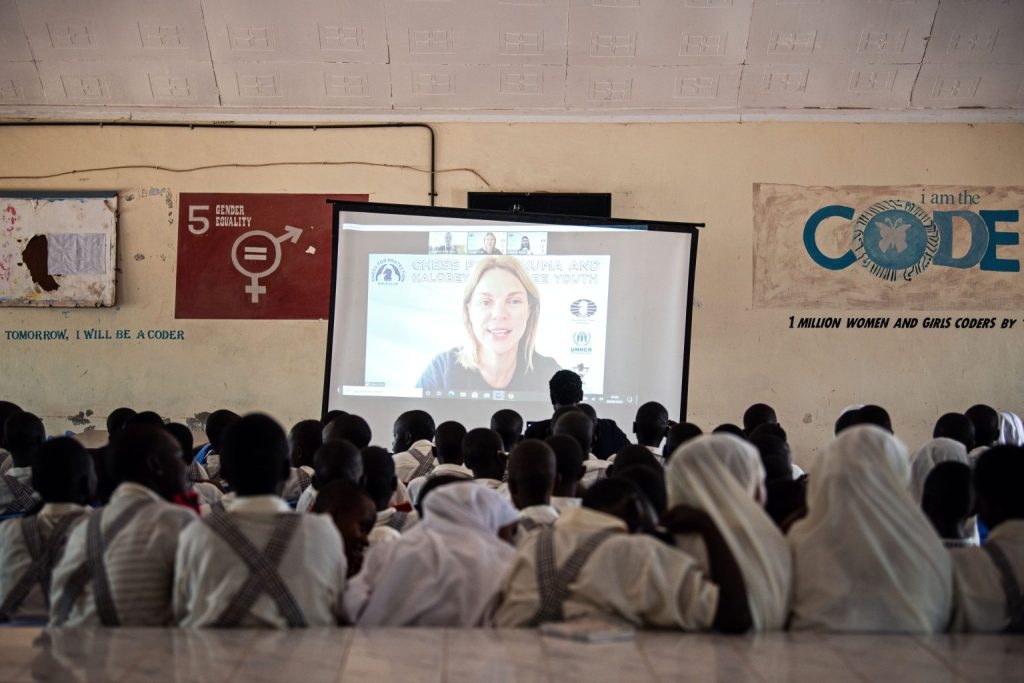
The programme extends far beyond the chessboard. Activities include meetings with successful women role models, reading and discussion sessions, creative workshops, leadership development activities, and chess training. Through these experiences, participants are encouraged to develop their voices, strengthen their self-belief, and envision new possibilities for their future.
The Girls’ Club benefits incredibly from the support of a dedicated team of international coaches. WGM Anastasiya Karlovich and IM/WGM Salome Melia regularly conduct online workshops and training sessions, while FM Sergey Klimakovs has already completed two in-person coaching visits to Kakuma and is planning another training camp later this year to help prepare refugee players for the historic participation in the Chess Olympiad.
As Anastasia Sorokina explains:
“The whole world is on the chessboard. You have to act calm. Take decisions. It helps girls to empower themselves. If you touch a piece, you have to move it – subtle things that help girls lead their future careers.”
A Historic Opportunity at the Chess Olympiad
One of the most significant milestones for the programme comes this year.
Under the agreement between FIDE and UNHCR, refugee players will have the opportunity to participate in the 46th FIDE Chess Olympiad in Samarkand, Uzbekistan, from 15–28 September 2026.
A competitive qualification process was organized across the different Chess for Protection segments, including community chess centres, primary schools, secondary schools, and the Girls’ Club. Following the selection events, five men and five women earned places on the refugee team.
FIDE will cover travel, accommodation, meals, local transportation, and visa-related expenses, making it possible for these talented players to represent refugee communities on one of chess’s greatest stages.
Expanding Chess for Protection to Bangladesh
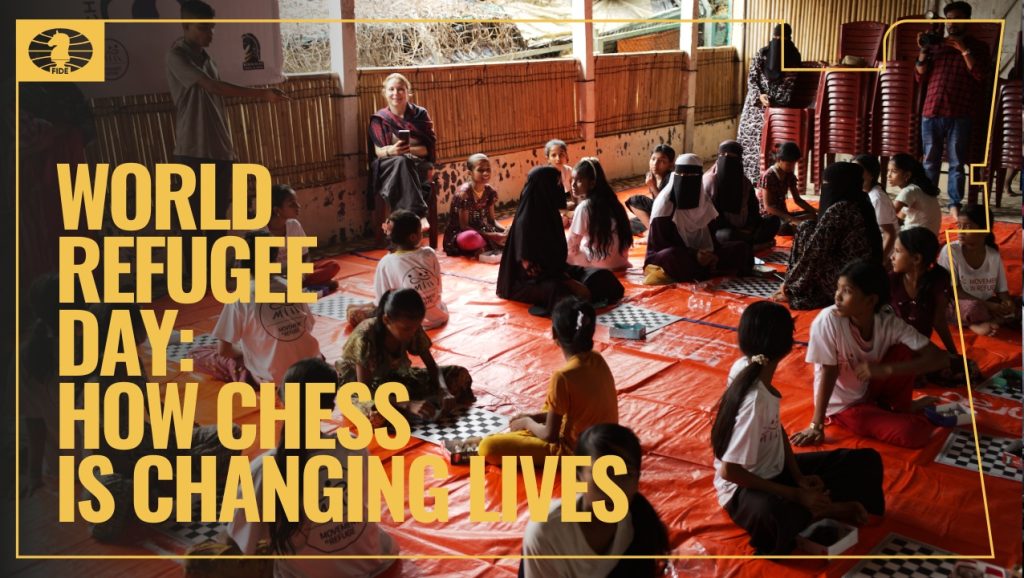
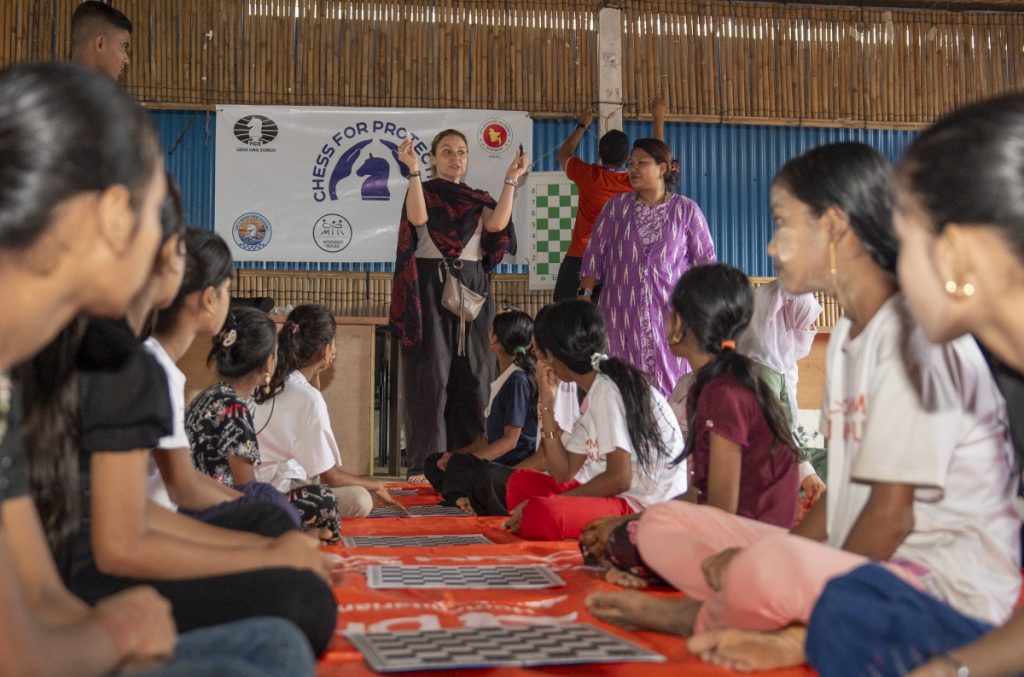
This June also marked an important new chapter for the programme as FIDE explored opportunities, in cooperation with the NGO Movement in Refuge, to extend Chess for Protection to Cox’s Bazar in Bangladesh, the largest refugee camp in the world.
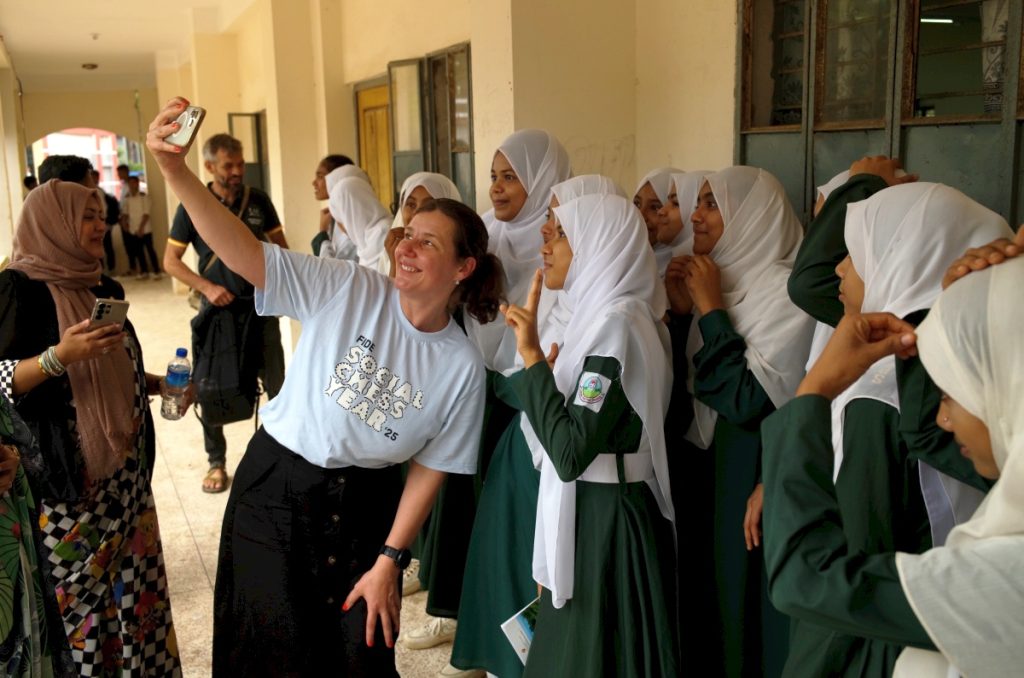
The FIDE delegation – Dana Reizniece, Deputy Chair of the FIDE Management Board; Anastasia Sorokina, FIDE WOM Chairperson, ACF Social Commission Chairperson and the Leader of FIDE Social projects; and Monalisha Khamboo, Founder of Himalayan Chess Academy and Secretary of the Nepal Chess Federation, and a member of our Commission – brought a rare combination of institutional authority, personal conviction, and field energy. During this very intense and meaningful trip, they visited refugee camps, schools, community centres, and local chess organizations while meeting government representatives, UN agencies, and development partners.
An impressive number of approximately 300 young people participated in chess activities across refugee camps and host communities. Special attention was given to engaging girls and creating opportunities for future girls’ chess programmes.
The program included training camps, visits to Sonarpara High School and Cox’s Bazar Chess Academy, as well as high-level meetings with Mohammad MizanurRahman, Refugee Relief and Repatriation Commissioner (RRRC), Government of Bangladesh; Aminul Hoque, Minister for Youth and Sports, Government of Bangladesh; Juliette Murekeyisoni, Deputy Representative, UNHCR Bangladesh; Peter Kern, Head of Office, Cox’s Bazar; and Mohammed Sala Uddin, IOM Protection Officer.
The Gift of Chess project, an active participant of the initiative, plans to provide 100 chess sets to the Cox Bazar refugee community.
Reflecting on the impact chess can have on young people, Dana Reizniece noted:
“Chess teaches you to take responsibility. To handle losses with resilience. To know you are not the only one in the room – to think of others’ plans and aspirations. In chess you learn to manage your pieces, your decisions. And this gives you the strength to not be manipulated by others – to manage the pieces and moves of your life.”
Monalisha Khamboo shared her own inspiring journey:
“I was a very shy and afraid child, with a strong stammer. Then I found chess and everything changed. I found my safe place where I could shine. Today I travel and teach around the world. All of this is because of chess.”
The visit laid the foundation for future cooperation and demonstrated the shared commitment of FIDE and its partners to bringing the benefits of chess to refugee communities beyond Kenya.
Celebrating World Refugee Day
To mark World Refugee Day 2026, FIDE, Chess Kenya, and UNHCR are organizing special chess tournaments on 20–21 June for participants of the Girls’ Club and the wider chess community of Kakuma Refugee Camp and Kalobeyei Settlement.
These events celebrate not only chess achievements but also the determination and aspirations of refugee youth.
As Chess for Protection continues to grow, the programme remains guided by a simple but powerful belief: everyone deserves the opportunity to learn, develop and dream about the future. Through chess, refugee children and young people are discovering new possibilities, building confidence, and becoming leaders within their communities.
On this World Refugee Day, the FIDE Commission for Women’s Chess proudly reaffirms its commitment to supporting refugee girls and boys around the world and to expanding opportunities through the universal language of chess.